

Last Updated on 1 year ago by Sachin G
In an interconnected world, remote access is very important, and AnyDesk is used as a reliable solution. Due to the fast and secure remote access feature of any desk, it is a popular choice for working professionals and system administrators. In this article, you’ll learn how to install AnyDesk on Ubuntu 22.04 using the terminal, and the same steps apply to Ubuntu 24.04 and Ubuntu 25.04. We’ll walk through the process step by step: downloading the .deb package, installing via apt, updating, and even uninstalling if needed.
I’ve personally faced situations where clients insisted on using TeamViewer, but later switched to AnyDesk due to its performance on Linux. This AnyDesk installation guide for Ubuntu, step by ste, will save you from those struggles and help you set it up quickly.
Why Use AnyDesk on Ubuntu Linux?
AnyDesk has a lot of features to simplify remote access and collaboration. AnyDesk provides a user-friendly interface and impressive performance. In Ubuntu installation, using the deb repository is a very straightforward step. Here I will guide you through each step and ensure you have a smooth setup for remote connectivity. Below are some of its important features.
- Remote desktop software for Linux that is lightweight and works even on low-bandwidth connections.
- Great for remote access to Linux server desktop environments.
- Provides a secure connection to Ubuntu AnyDesk by using TLS-1.2 encryption.
- Many users prefer it in the AnyDesk vs TeamViewer Ubuntu debate due to lower system resource usage.
Update AnyDesk on Ubuntu (22.04, 24.04, 25.04)
Always update your system before installing new software.
sudo apt update && sudo apt upgrade -yI’ll guide you through two easy ways to install. Just pick the one that suits you best!
METHOD 1
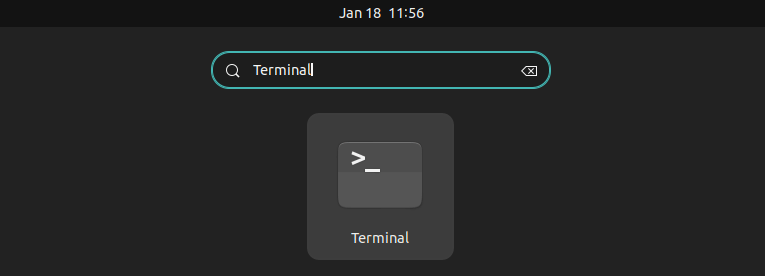
Installation Step 1: Launch Terminal
Open the Terminal on your Ubuntu system by searching for “Terminal” in the application launcher.
Step 2: Switch to Root User
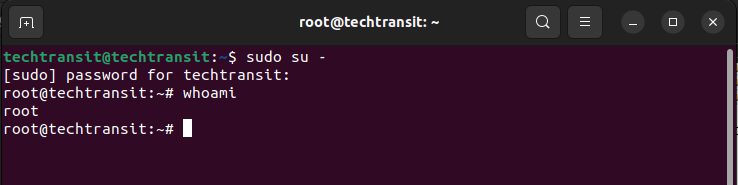
Run the below command to switch to the root user because, in the next steps, we are going to add the key repository, it needs root access. You can also refer attached screenshot. when you put this sudo command then it will ask for the password of the user from whom you log in. The “Whoami” command helps you confirm if you’ve switched to the root user.
sudo su -
Step 3: Add repository key
I followed the steps, and the result showed a warning message stating that the add-key is outdated. I proceeded with further steps but we will resolve this warning in a further post.
wget -qO - https://keys.anydesk.com/repos/DEB-GPG-KEY | apt-key add -

Installation Step 4: Add the repository
Here we are adding the repository to install anydesk package.
echo "deb http://deb.anydesk.com/ all main" > /etc/apt/sources.list.d/anydesk-stable.list
Installation Step 5: Update the cache
The command below is to update the index package list and update the cache on Ubuntu.
apt update
Installation Step 6: Install AnyDesk
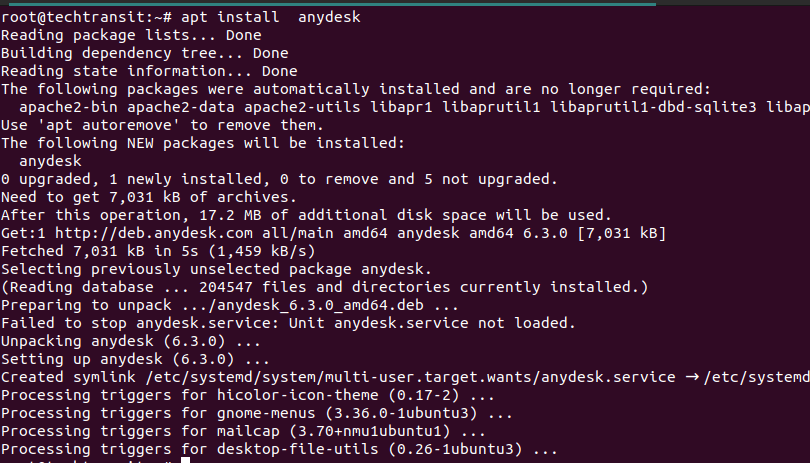
Now, install AnyDesk using the following commands:
apt install anydesk
METHOD 2
Installation Step 1: Get the AnyDesk DEB Package
Firstly, go to the official website (https://anydesk.com/download ) and search and download the DEB package suitable for Ubuntu on the official website web page. Save the file in a download location that you can easily access.
Installation Step 2: Browse the Downloads Directory
Use the cd command to navigate to your Downloads directory. If you saved the AnyDesk DEB package there, the command will be
cd ~/Downloads
Installation Step 3: Install AnyDesk
Now, install AnyDesk using the following commands:
sudo dpkg -i anydesk_*.deb
sudo apt install -f
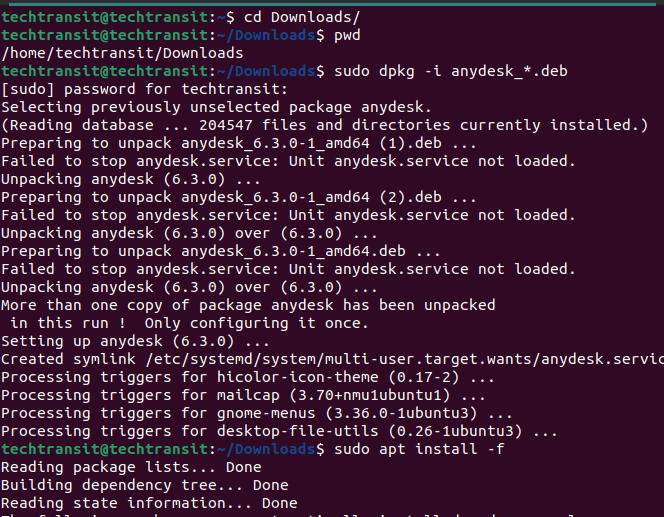
The above command helps to install the package.
Launch and Set Up AnyDesk
With the installation complete, launch by typing or searching in the application launcher.
anydesk
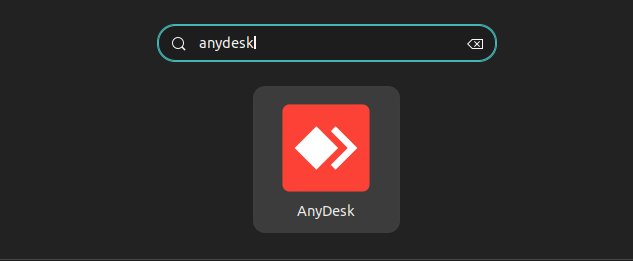
Use the Ubuntu remote desktop with the AnyDesk terminal method to connect securely to another system by entering the AnyDesk ID.
Connect and Get Remote Access
Upon launching, you’ll be shown desk your ID. Share this ID with the person you want to connect with or enter the ID of the remote device you wish to access.
Update AnyDesk on Ubuntu (22.04, 24.04, 25.04)
Keep your installation current:
sudo apt update && sudo apt upgrade anydesk -yThis ensures you’re always on the latest version — covering update AnyDesk Ubuntu 22.04 24.04 25.04 terminal.
Uninstall AnyDesk on Ubuntu
If you no longer need it, remove it completely:
sudo apt remove anydesk -yThis is the uninstall AnyDesk Ubuntu terminal command you’ll need.
Real-World Use Cases and Challenges
- Small business IT support: AnyDesk helped one of my clients access their Ubuntu remote desktop support system during the COVID-19 lockdowns.
- Developers on the go: Many prefer AnyDesk for quick deb package installation Ubuntu when setting up test environments.
- Lightweight remote desktop for Ubuntu users: It consumes fewer resources compared to heavier tools like TeamViewer.
FAQs
Add the AnyDesk repository, update apt, then run sudo apt install anydesk -y
Yes. The installation of AnyDesk on Ubuntu 24.04 command line and setting up AnyDesk on Ubuntu 25.04 terminal follow the same steps.
AnyDesk is lightweight and faster on low-resource systems, while TeamViewer offers more enterprise features.
Run sudo apt remove anydesk -y to uninstall.
Yes. Run sudo apt update && sudo apt upgrade anydesk -y to upgrade to the latest release.
Installing AnyDesk on Ubuntu using the terminal is straightforward if you follow the right steps. Whether you’re on Ubuntu 22.04, 24.04, or 25.04, you can set up, update, and even uninstall it quickly.
Learn Smarter. Level Up Faster →
Want to master Linux, DevOps, Ansible, or Cloud workflows the smart way? I’ve curated a list of top-rated, real-world Udemy courses — based on student reviews and practical feedback.
Visit the Recommended Courses page to explore and enroll in courses trusted by the community.
See Curated Courses →
I’m Sachin Gupta — a freelance IT support specialist and founder of techtransit.org. I’m certified in Linux, Ansible, OpenShift (Red Hat), cPanel, and ITIL, with over 15 years of hands-on experience. I create beginner-friendly Linux tutorials, help with Ansible automation, and offer IT support on platforms like Upwork, Freelancer, and PeoplePerHour. Follow Tech Transit for practical tips, hosting guides, and real-world Linux expertise!